At 03:12 AM on March 22, 2026, the first naval strike package was already moving into position while Iranian missiles were still being counted in the aftermath of the latest exchange. This was not a symbolic show of force. It was a layered response built around combat readiness, airpower, and the kind of maritime pressure that can seal off an entire chokepoint. By the time the news cycle caught up, the U.S. had already shifted the tempo. The Strait of Hormuz was no longer just a map point. It was the center of gravity.
What makes this operation unusual is the scale of the signaling. We are talking about a region where nearly 20 million barrels of oil move every single day, and where even a temporary disruption can ripple across global markets in minutes. ABC News reported on March 22 that the war with Iran is now entering its fourth week, with Americans already feeling the pressure through gas prices and flight cancellations, while oil could climb as high as $175 a barrel. That is not abstract. That is strategic leverage.
And the geography matters. The Strait of Hormuz is only about 33 kilometers wide at its narrowest point, with shipping lanes even tighter than that. In a crisis like this, every mile, every radar sweep, every launch cycle counts. On the same day, ABC News noted Trump’s warning to obliterate Iranian power plants if the Strait stays closed, while DW reported Iranian missiles striking near Israel’s nuclear research facility and more than 100 people injured. The message across the region is unmistakable: this conflict is no longer contained to one front. It is expanding, hardening, and pulling in every major node from the Gulf to the Indian Ocean.
And then there is the information war. ABC News’ March 22 report on how Iranians are receiving information during war shows a fractured media environment: pro-regime channels, opposition voices, diaspora networks, and encrypted feeds all fighting for control of the narrative. In war, information is fuel. It shapes morale, compliance, panic, and resistance. the first reports were already moving through that ecosystem while the U.S. naval response was being assembled in parallel.
This is where the human machine comes into view. Sailors, Marines, and flight crews do not improvise a response of this size. They execute it. The Boatswain’s Mates, the aviation ordnance crews, the loadmasters, the maintainers, the watch officers — each one has a role, and each role has a clock attached to it. The crew moves with rifle, body armor, ammunition, because battle stations means readiness at every level, not just in the cockpit.
On deck, the launch rhythm is brutal and precise. Jets are fueled, checked, armed, and cycled. The deck crews guide, signal, and clear the path. Marines secure the perimeter. The ship’s leadership watches the strike package build in real time. One aircraft does not make this kind of message. A formation does. A carrier strike group does. Three carriers do.
the pace sharpened as the first wave of aircraft came online and the deck teams pushed into full combat readiness. You can feel the logic of the operation in the sequence itself: secure the ship, arm the aircraft, verify the systems, launch the package, hold the line. Short. Controlled. Relentless.
And the personnel picture is just as important as the hardware. These crews operate through fatigue, through static, through pressure. They work with ordnance that has to be loaded exactly right, with timing that cannot slip, with coordination that stretches across miles of ocean. In a zone where one misread signal can escalate an entire theater, discipline is the weapon. Speed is the shield. Coordination is the strike.
The centerpiece here is the F/A-18, and its reputation comes from what it can carry and what it can survive. A Super Hornet can push past 1,200 nautical miles with external fuel, hit high subsonic speeds, and carry a wide mix of precision ordnance, air-to-air missiles, and anti-ship weapons. It is built for flexibility, but in this environment flexibility becomes dominance. Only the F/A-18 can launch from a carrier deck and turn that floating runway into a mobile strike platform within minutes.
That matters because the Strait of Hormuz punishes hesitation. Ships need coverage. Airspace needs surveillance. Targets need pressure. The carrier air wing supplies all three. Around the clock, the flight deck cycles through refuel, rearm, launch, recover, and relaunch. Through the entire night, the rhythm does not stop. The aircraft, the radar, the communications suite, the electronic warfare support — all of it works as a single system.
And the strike package is not just aircraft in the air. It is escort, support, deception, and reach. It can include fighters, tankers, surveillance platforms, and surface combatants all synchronized to a single objective. That is what makes American naval power so hard to counter. It is not one asset. It is the stack.
From the pilot’s sethe process is pure procedure. Checklists. Displays. Engine start. Flight control checks. Weapons status. Fuel state. The cockpit comes alive one system at a time, then all at once. A technician on the deck confirms every pin, every panel, every line. The pilot verifies the aircraft, the crew chief confirms the seal, and the ship’s launch officer clears the sequence.
the engines were spooled, the jet was ready, and the deck was locked into the final pre-launch rhythm. There is no drama in the checklist itself. The drama is in what follows. When the catapult fires, there is no hesitation. When the throttle advances, the aircraft commits. When the deck clears, the mission begins.
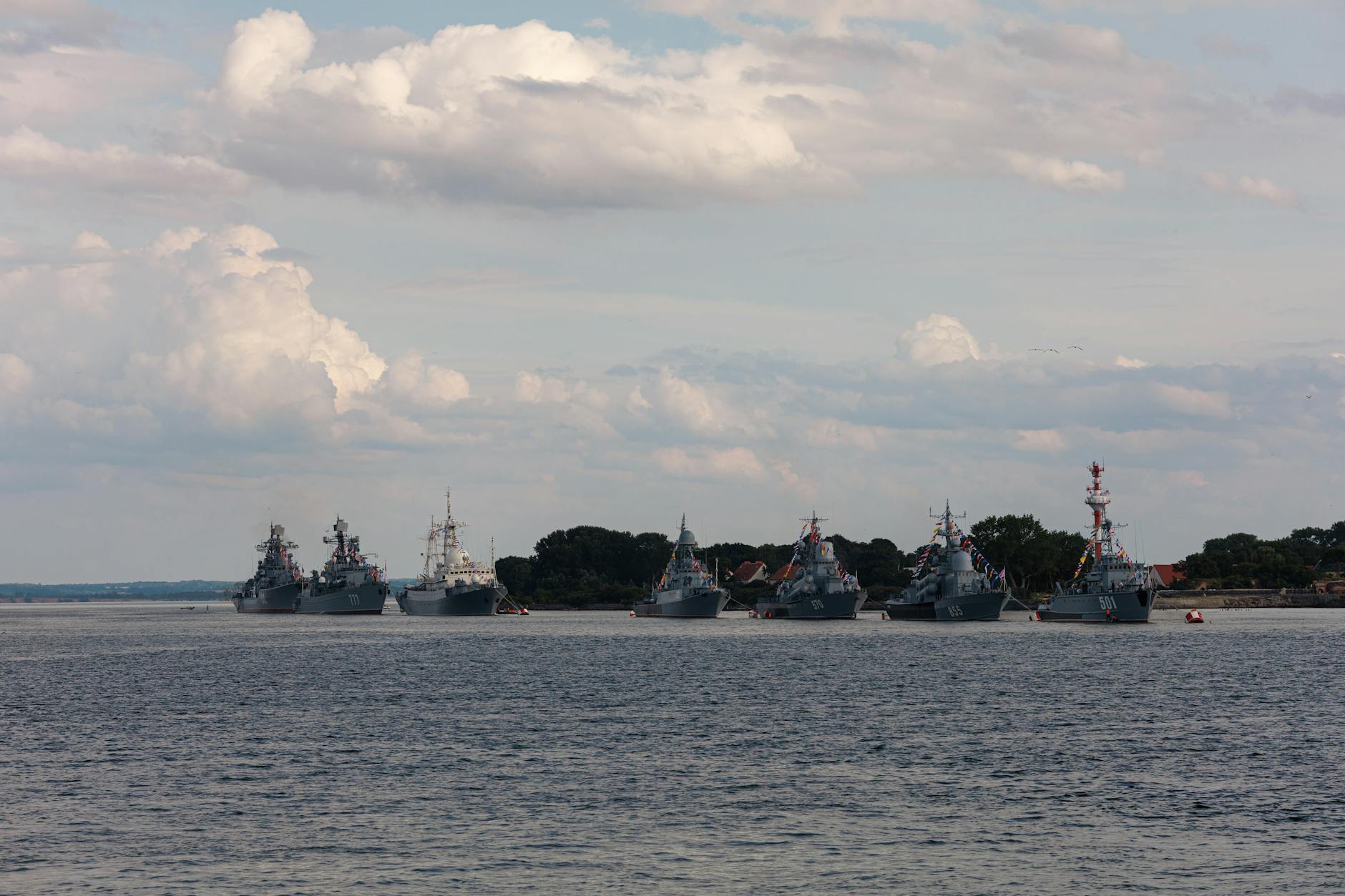
Then the movement became visible. The carrier air wing turned, accelerated, and streaked forward while surface combatants converged in parallel lanes. Alongside the F/A-18s, the destroyers were also moving, and that layered presence changed the entire picture. Radar arcs widened. Flight paths tightened. The strike package erupted into the night and the sea around it became a grid of controlled force.
The signal was not subtle. It was deliberate. It was public. It was immediate. By , the first wave had already reshaped the operating environment, and every observer in the region understood the same thing at the same time: the United States had brought carrier power, airpower, and maritime reach to the same point on the map.
America doesn’t bluff. Not when a chokepoint is at risk. Not when the Gulf is under pressure. Not when the next 72 hours can decide whether the crisis stays regional or spreads wider. The next phase will be defined by pressure, posture, and precision. The message is clear. America is not asking.