The first Hornet package hit battle stations while the Strait of Hormuz was already under pressure. One month into the war, Washington was no longer talking about warnings — it was moving steel, airpower, and special operators into the same battlespace. That matters because this is not one isolated strike. This is a layered military response built to control a choke point where $100 oil, 300 wounded American troops, and nonstop retaliation now define the pace of war. Stay with this, because the next 72 hours will show why Iran’s pressure campaign may have triggered the strongest U.S. posture yet in the Persian Gulf.
On March 28, 2026, the conflict with Iran reached day 28, and the center of gravity shifted hard toward Hormuz. ABC News called it a full month of war; DW News added that Marco Rubio told G7 counterparts he expected another two to four weeks of fighting. That is not background noise. That is a timetable. In the same 24-hour cycle, Washington was signaling indirect talks while also adding special forces, and India Today highlighted preparations for 3,000 to 4,000 more troops, including elements of the 82nd Airborne Division. That is a serious footprint.
The Strait of Hormuz is barely 33 kilometers wide at its narrowest point, yet it controls a huge share of global energy flow. When traffic gets squeezed there, the effect is immediate: shipping delays, market spikes, and military escalation. The question is no longer whether the U.S. can project force. The question is how much force it is willing to stack into one narrow corridor. And in this operation, the answer is unmistakable: combat readiness, flank speed, and strike package discipline. That is why the Pentagon has treated Hormuz like a live battlefield, not a diplomacy lane.
Before dawn, the first movement came from the ground side of the theater. Loadmasters, Jumpmasters, and security teams were already cycling through aircraft and staging areas, checking rifles, body armor, ammunition, and comms kits for the next push. It was a tight rhythm: men moving with purpose, pallets rolling, crews loading under floodlights, and operators from different units merging into one machine. The Marines in the staging lane did not look like they were preparing for a parade. They looked like they were preparing for contact.
Around the perimeter, the convoy element followed the same logic. Armor crews, security forces, and liaison teams worked in layers, each one covering the next. The mission was not just to show presence. It was to create pressure. To force a response. To make Iran look at every road, every depot, every launch site, and every coastline approach and wonder where the next hit would land. That is how modern war works in a region like this. Not with one dramatic move, but with a thousand small signals that say the same thing: the Americans are already inside your decision cycle.
And the scale was enormous. More than 300 American troops had already been wounded in the war, and every new movement had to protect force posture, route security, and command continuity. The crew moved with discipline. The load was locked. The line stayed active. But here is where it gets really dangerous.
Then the hardware came alive. F/A-18 Hornets are not decoration. A fully loaded Super Hornet can carry over 17,000 pounds of ordnance, reach around 1,190 miles per hour, and strike deep with precision weapons, air-to-air missiles, and electronic warfare support. The carrier air wing uses them because they are versatile, fast, and built for combat readiness around the clock. Only the F/A-18 can switch from fleet defense to strike escort to maritime interdiction in the same sortie window.
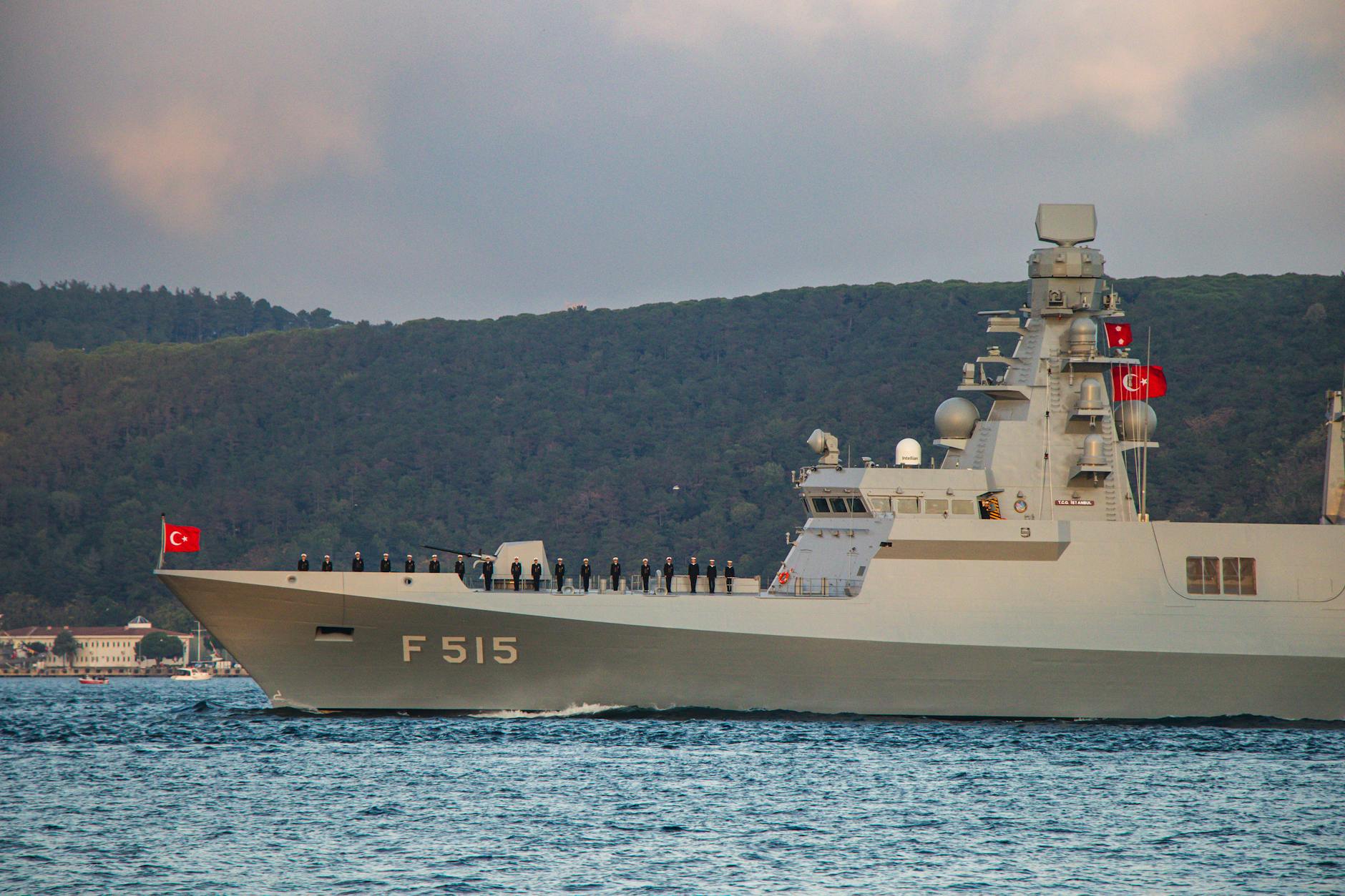
Alongside the Hornets, the destroyer screen kept moving, and the submarine layer stayed silent below the surface. That combination is the point. Air, sea, undersea. One package. One message. Through the entire night, technicians ran fuel checks, weapon safeties, data-link tests, and flight-control verification. The ordnance crews handled live munitions with exacting precision. The deck crews tracked every step. The air boss monitored wind, angle, and deck conditions. No improvisation. No loose ends. Just battle stations, one panel at a time.
The strike group was not operating in a vacuum either. News out of Israel pointed to strikes on Iranian nuclear facilities, and the U.S. posture had to account for that wider campaign. Hormuz was becoming the pressure valve for the entire war. And when a carrier group enters that equation, it changes the geometry of the fight. Not just what can be hit, but when, how, and by whom. Stay with this. The real operation hasn't even started.
Inside the cockpit, the pilot’s checklist was brutally simple. Power on. Systems green. Navigation aligned. Weapons status verified. Link stable. Sensors clean. The jet crew moved through the pre-flight flow like clockwork, because in this kind of operation, one missing step can break the whole strike package. The maintenance team finished the last inspection, the crew chiefs gave the final signals, and the engines began their rise from idle to launch-ready power. The sound alone told the story. This was not training. This was not theater. This was a live combat deployment tied to a regional crisis.
On the deck, launch crews confirmed catapult position and recovery windows. The pilots sat strapped in, visor down, hands steady, waiting for the green light. The entire carrier was in motion now, a floating airfield with thousands of personnel, billions in capability, and one job: dominate the battlespace. Every system was green. Every crew was ready. And then—
The order came, and the tempo snapped upward. Hornets accelerated, one after another, streaking off the deck and into the dark like guided fire. At the same time, the escort screen turned hard along the perimeter, while the undersea element converged below. The destroyer line was moving, the air wing was climbing, and the special operations layer was already shifting toward the next node. Alongside the F/A-18s, the electronic warfare assets were also active, blanketing the approach routes and forcing every hostile sensor to work harder.
Then the first contact picture lit up. Radar tracks, maritime lanes, and coastal signatures all converged into one compressed battlespace. The strike package turned toward the threat ring. The deck crew kept launching. The command element kept feeding the picture. And somewhere in that chain, the message became clear: if Iran pushed too far, the response would not be symbolic. It would be immediate, layered, and punishing. Suddenly the Strait of Hormuz was not just a shipping lane. It was an active military arena where airpower, sea power, and special operations all pointed in the same direction.
America doesn’t bluff. The next 72 hours will decide whether Hormuz stays a pressure point or becomes a decisive theater. With troops moving, air wings launching, and special forces in the region, the signal is unmistakable: the U.S. is not waiting to be cornered. It is shaping the battlefield now. The message is clear. America is not asking.