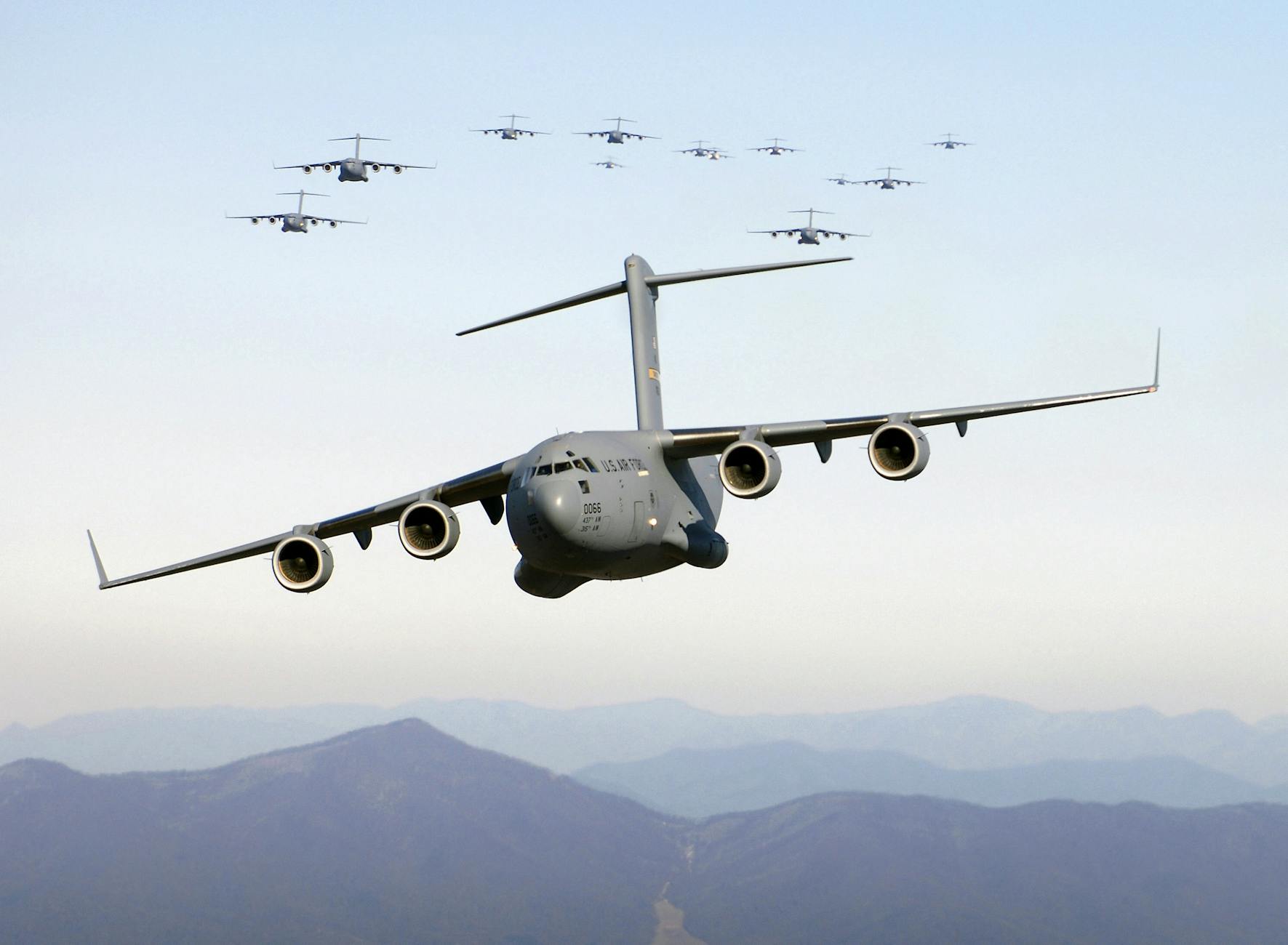
The recent sighting of the NT-43A, a highly classified variant of the Boeing 737, over Florida in support of NASA's Artemis II launch has captured considerable attention. This aircraft, typically shrouded in secrecy, is believed to be involved in advanced testing and training operations, providing critical support for what is poised to be a watershed moment in U.S. space exploration—marking the return of human beings to the Moon for the first time since the Apollo program. As the Artemis II mission gears up for its historic crewed lunar flight, the involvement of this unique aircraft underscores the complex interplay between military aerospace capabilities and NASA's ambitious goals.
The NT-43A is primarily utilized for training and operational support, often associated with electronic warfare and reconnaissance missions. Its capabilities extend beyond standard flight operations, making it an invaluable asset in scenarios that require precision, adaptability, and stealth. The aircraft's presence at such a high-profile civilian launch serves as a reminder of how military assets can augment national objectives beyond traditional defense roles. The strategic implications of this crossover are significant, as they highlight a growing trend of integrating military technologies into civilian applications, particularly in the realm of space exploration.
Geopolitically, the Artemis II mission is not just a scientific endeavor but also a strategic maneuver in the context of global space competition. The United States is keenly aware of rising challenges from other space-faring nations, notably China and Russia. Both countries have made substantial investments in their respective lunar and deep-space exploration programs, with China actively pursuing its own lunar missions and aiming for a permanent presence on the Moon. In this light, the Artemis II mission is a bold assertion of U.S. leadership in space and a clear signal of its commitment to maintaining a preeminent role in aerospace endeavors.
Moreover, the collaboration between NASA and military assets like the NT-43A may pave the way for future partnerships that could enhance both national security and scientific exploration. As the boundaries between military and civilian aerospace applications blur, it becomes increasingly essential to consider the strategic implications of such collaborations. The technological advancements derived from these joint efforts could not only bolster U.S. capabilities in space but also strengthen deterrence against potential adversaries who might seek to challenge U.S. interests in this increasingly contested domain.
As the Artemis II mission approaches its launch window, further developments regarding the involvement of the NT-43A and other military assets will be closely monitored. There is an anticipation surrounding what role these aircraft will play in ensuring mission success, particularly in the realms of safety, navigation, and operational resilience. Additionally, the outcomes of Artemis II will likely influence future missions under the Artemis program, which aims to establish a sustainable human presence on the Moon and eventually prepare for crewed missions to Mars.
In conclusion, the NT-43A's participation in the Artemis II launch preparations signifies more than just a logistical support role; it represents the convergence of military capabilities with national space aspirations. As the United States embarks on this historic mission, the implications extend beyond scientific discovery, touching upon themes of geopolitical strategy and international competitiveness. Observers will be keenly watching the developments leading up to the launch, as the outcomes could shape the future trajectory of U.S. space policy and its stance in the global aerospace arena.