the Strait of Hormuz lit up with radar spikes, carrier signals, and F/A-18 launch activity in the same narrow corridor. That is not routine. That is combat readiness turning into a live pressure test across one of the most dangerous chokepoints on Earth. On March 24, 2026, as Nightline’s Day 24 special captured the war with Iran entering its most fluid phase, the U.S. Navy was already forcing a new tempo into the Persian Gulf.
This matters because Hormuz is not just water. It is 21 miles wide at its narrowest point, with shipping lanes even tighter, and roughly 20 million barrels of oil moving through the broader energy system tied to it every day. One disruption here hits tankers, insurance markets, refineries, and global pricing within hours. And right now, the political layer is just as volatile as the military one. ABC News says the Trump administration is not confirming if in-person talks will happen in the coming days, calling the situation “fluid,” while DW reports the five-day postponement of strikes against Iranian energy targets after what Washington called productive talks.
That is the setup. Diplomacy in public. Force posture in private. By 03:00 AM, the fleet picture in the Gulf was already changing. Strike package. Air cover. Surface screen. And at the center of it, the U.S. Navy’s ability to project power without waiting for permission. This is why Hormuz is different from every other flashpoint. The margin is tiny. The consequences are enormous. And the U.S. is operating with the full logic of a carrier force built for exactly this kind of moment.
The personnel side is where this becomes real. It is not just pilots in cockpits. It is deck crews, ordnance teams, loadmasters, avionics techs, and boatswain’s mates moving in a machine-like rhythm. They work with rifle, body armor, ammunition, and a checklist culture that leaves almost no room for error. The crew moves as one body. Marines secure the perimeter. Sailors handle the launch cycle. Airmen and naval aviation specialists keep the aircraft combat-ready through the entire night.
A strike package like this is built from layers. Launch control. Recovery control. Fuel handling. Weapons handling. Maintenance. Command and control. Every lane has a specialist, and every specialist has a clock. the deck crews were in battle stations posture, moving jets, clearing lines, and preparing ordnance for the next wave. That is the hidden force behind the headline. People think in terms of one aircraft. The Navy thinks in terms of 5,000 personnel, 30-plus aircraft, and a floating combat system that can surge faster than any land base in the region.
And in a chokepoint like Hormuz, that matters more than rhetoric. One crew member misreads one signal, and the whole cycle slows. One crew member gets it right, and the entire strike rhythm stays intact. That is the difference between noise and power. Between presence and dominance. Between a warning and a message.
Now look at the hardware. The F/A-18 Hornet is not a showpiece. It is a multi-role workhorse designed for strike, escort, suppression, and maritime pressure. It can carry a heavy ordnance load, fly fast, and operate from a carrier deck that is smaller than the runway most people imagine when they picture air power. It is built to launch hard, turn fast, and come back under pressure. In the right configuration, it becomes a knife in the dark.
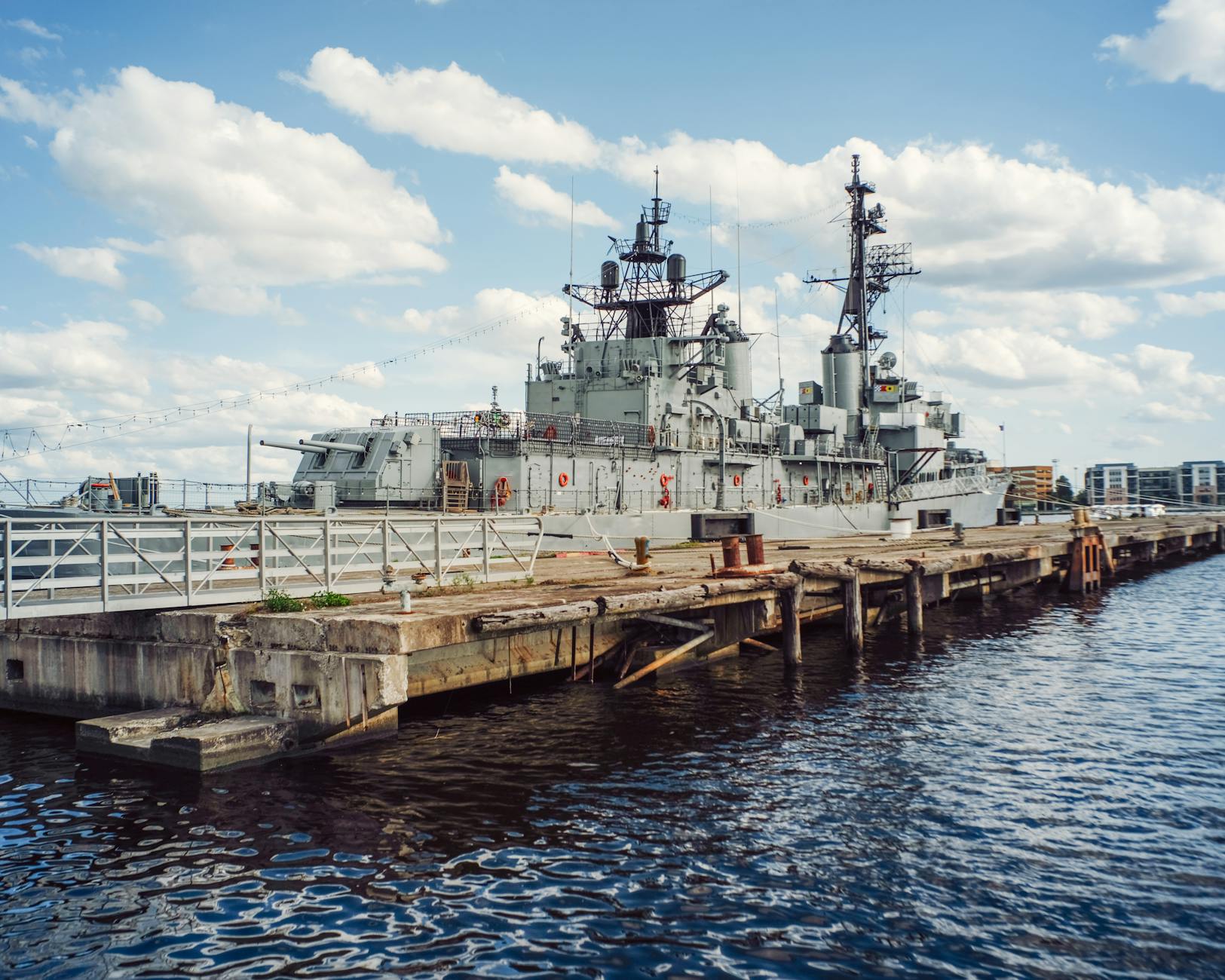
Only the F/A-18 can deliver that mix of carrier flexibility, speed, and strike reach while operating around the clock from the sea. That is the point. The aircraft is not just a jet. It is a moving node in a larger system. Alongside it, the escort destroyers provide radar coverage and layered defense. The carrier itself becomes a mobile airbase. The strike package becomes a chessboard of sensors and firepower.
Add the numbers. A Nimitz-class carrier displaces about 100,000 tons. A destroyer can sprint past 30 knots. A strike air wing can generate sorties through the entire night if the deck cycle holds. Put those together in the Persian Gulf, and you have a force that can stare down a crisis without blinking. This is why the U.S. Navy is so dangerous in confined waters. It does not need territory. It needs timing, range, and control of the air.
Inside the cockpit, the procedure is brutally methodical. The pilot runs through the checklist. Fuel state. Flight controls. Radar. Countermeasures. Navigation. Weapons status. The technician on deck confirms the launch sequence. The crew chief gives the final hand signal. The engines spool. Systems wake up. The aircraft becomes an instrument of pressure in seconds.
the first Hornet rolled forward, the engine note sharpened, and the deck crew snapped into motion. Pre-flight is not a formality. It is a discipline. Every switch has meaning. Every light has a purpose. Every green indicator means the machine is ready to go to war if ordered.
And that is what makes this confrontation so serious. The U.S. is not improvising. It is executing a prepared cycle. The pilots know the airspace. The technicians know the jet. The carrier knows the sea. The entire system is built for momentum, and momentum is what Iran is now being forced to measure. Not a speech. Not a tweet. A launch sequence. A strike posture. A live carrier deck in motion.
Then the first contact window opened. The jets turned, accelerated, and streaked out over the water while the destroyers converged on their screen positions. Radar vans lit up. Combat air patrol shifted. Ordnance teams stayed locked in. Alongside the lead Hornet, the escort aircraft was also moving, and the surface group tightened the box around the strike lane. That is how the U.S. Navy creates uncertainty for an opponent. It moves more than one piece at once.
multiple systems were active simultaneously: air cover, surface defense, command relay, and launch support. The result was a layered show of force that left no ambiguity about readiness. The message was not subtle. The message was not passive. It was a synchronized demonstration of reach across the Strait of Hormuz, where one mistake can cascade into a regional crisis.
The strategic meaning is simple. America doesn’t bluff. When a carrier group moves into a pressure zone, it brings air power, sea power, and command power together in one floating platform. That is why the next 72 hours matter more than the last 24. The balance in the Persian Gulf is being tested in real time, and the U.S. is answering with structure, speed, and force posture.
The carriers do not need to shout. The jets do not need to explain. The destroyers do not need applause. The message is clear. America is not asking.