Three carrier groups, one blockade line, and a single order from Trump after the Florida special election dust-up: Iran’s oil lifeline was about to get squeezed. In the middle of the same week Trump explained why he voted by mail in Florida, the Pentagon moved like a hammer. Not a warning shot. A pressure campaign with teeth. Kharg Island, the export artery for Iranian crude, suddenly became a battlefield problem worth billions. And while Tehran was still trying to absorb the latest missile waves across the region, the U.S. Navy was already shifting destroyers, aviation, and surveillance into a tighter net. This was not routine presence. This was maritime strangulation at scale, backed by airpower, intelligence, and the kind of combat readiness that tells every tanker captain one thing: the lane is closed.
What makes this operation unusual is the combination of speed, reach, and synchronization. The U.S. isn’t just shadowing ships. It is building a layered blockade posture across hundreds of kilometers of open water, with destroyers pushing flank speed, P-8 Poseidon aircraft sweeping wide search boxes, and special operations assets feeding targeting data into the chain. That means oil terminals, loading points, and escort routes all become vulnerable at once.
Kharg Island sits inside a strategic corridor where even a 10% disruption can ripple through global markets. Analysts in the last 7 days pointed to the Philippines energy emergency, where fuel reserves could last only 45–60 days if the Iran war keeps hitting supply routes. That is the wider cost of this battlefield. The U.S. is not just protecting a sea lane. It is threatening the revenue stream that keeps an entire war economy running.
Steve Witkoff’s remarks about pre-war talks, Trump’s cabinet meeting, and the fresh missile wave across the Middle East all feed the same picture: Washington is using diplomacy and force together. On Thursday, Iran launched five waves of ballistic missiles in two hours. Intercepts spread across Bahrain, Saudi Arabia, and Kuwait. That tells you the threat is regional. It also tells you why the blockade matters. If Iran can still fire missiles, then the answer becomes pressure, interdiction, and destruction of export capacity.
Before dawn, the first movement was on land, not sea. Marines loaded rifles, body armor, and ammunition into vehicles near a forward staging area, while a loadmaster ran the cargo checks and a jumpmaster reviewed the drop sequence for a parallel insertion package. The crew moved with discipline: helmets locked, comms tested, NVGs ready, cargo nets secured. This is how a blockade becomes real. Not with speeches. With people. With movement. With weight.
A convoy of armored vehicles rolled out in darkness, dust rising behind them, while security elements established a ring around the launch zone. One team secured the perimeter. Another team confirmed fuel, ordnance, and route timing. A third team prepared to feed intelligence into the strike cell. That is how a blockade line is built: surveillance, mobility, and shock.
In the same window, a special operations element rehearsed a night raid profile against coastal infrastructure tied to Kharg. Fast rope drills. Breach timing. Target marking. Extraction planning. The objective was simple: deny the enemy confidence, deny the enemy tempo, deny the enemy money. And when a blockade needs teeth, the ground component gives it force. Marines do not just watch a coastline. They own the space around it.
The convoy turned, halted, then turned again as new coordinates came in from the P-8. That meant the plan was live. The crew knew it. The pilots knew it. Tehran would know it soon enough. But they weren’t done. Not even close.
The main platform driving this pressure is the P-8 Poseidon, a 737-based maritime patrol aircraft built for long-range detection, anti-submarine warfare, and surface surveillance. It can fly over 900 miles per hour, cover more than 1,200 nautical miles on a single mission profile, and stay on station long enough to track multiple contacts around the clock. Only the P-8 can combine that speed, sensor reach, and strike coordination in one aircraft. That matters over Kharg Island because tanker traffic, escort patterns, and terminal activity all change fast.
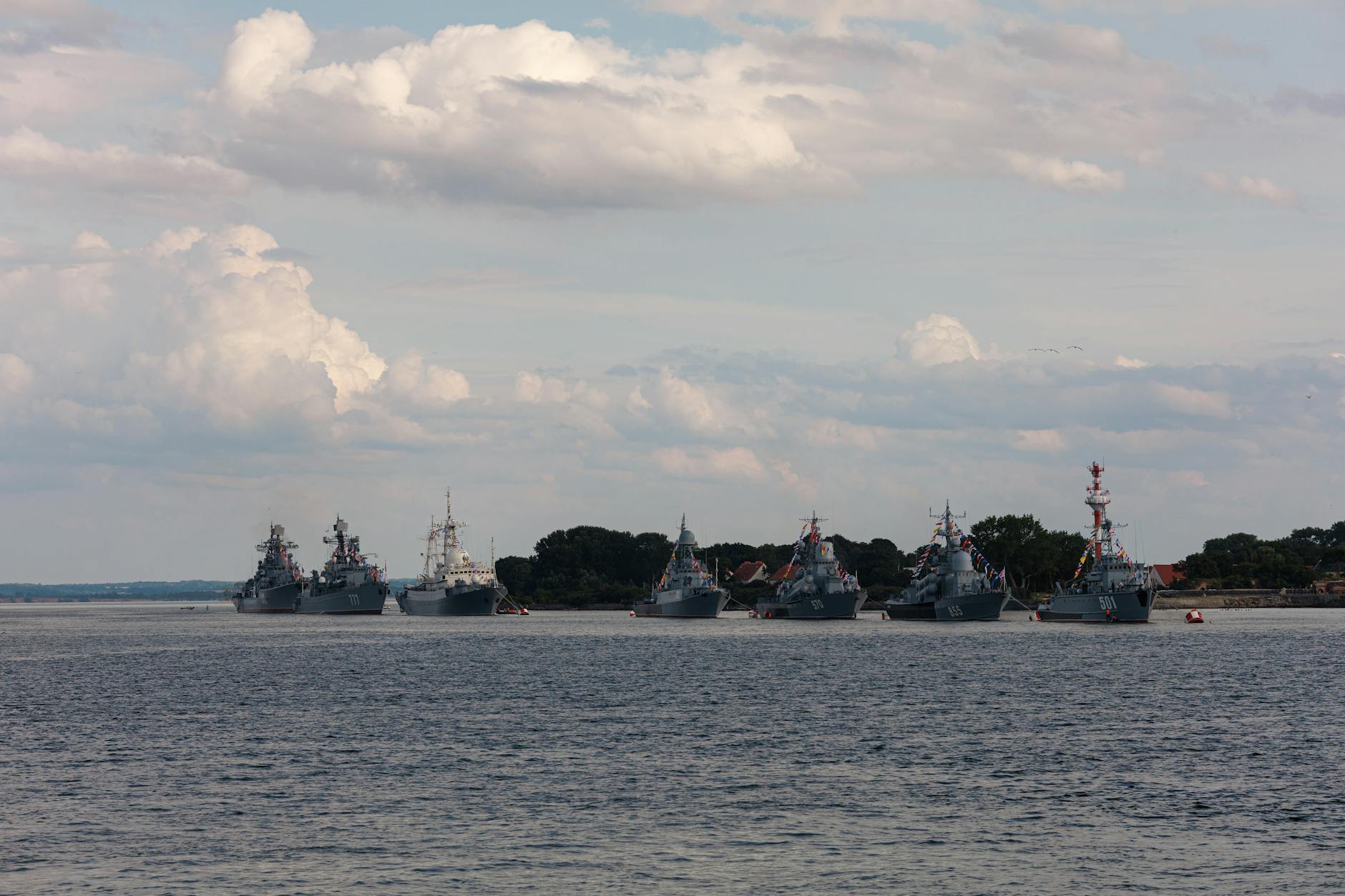
On the surface, the U.S. destroyers are the visible wall. Each one carries roughly 9,200 tons of combat power, Aegis sensors, and a magazine built for layered defense. They can launch Tomahawks, track air threats, and hold a maritime choke point under constant pressure. Alongside the destroyers, submarine activity keeps the enemy guessing beneath the waterline. Above them, the P-8 keeps scanning through the entire night, feeding the picture into the strike package.
This is not one weapon. It is a system. Radar, sonar, infrared, comms. Speed, range, endurance. The blockade works because every layer reinforces the next. One contact is detected. Another is cut off. Another is pushed away. Then the terminal itself becomes isolated. When that happens, the cost of moving oil spikes instantly. A tanker delayed is money lost. A loading cycle interrupted is revenue gone. A terminal under threat is strategic leverage.
And that is exactly why the U.S. keeps the pressure on. Not with noise. With geometry. With sensors. With force.
But the clock was ticking. And Tehran knew it. Inside the cockpit, the pre-flight rhythm was precise and cold. Flight crew ran the checklist line by line: power, navigation, sensors, fuel balance, weapons systems, data links. Technicians closed panels and confirmed every switch. The pilot checked the mission computer. The mission commander verified the target box. The loadmaster signed off the cargo state. Every crew member had one job, and no one moved early.
Engines came alive with a deep mechanical roar. Systems cycled green. The crew switched to battle stations posture. On the destroyer side, combat information center teams tracked contacts, updated bearings, and refined the maritime picture. On the P-8, the sensor operator locked the search arc over Kharg Island. The whole strike package was now synchronized.
That is the hidden part most people miss. A blockade is not one dramatic moment. It is a chain of small, lethal decisions. Fuel, altitude, heading, timing, comms, ordnance. All of it matters. All of it points in one direction. The target list had already been narrowed. The sea lane had already been mapped. The next move would not be symbolic. It would be visible.
Then the order came. And nothing would be the same. The first contact was detected, turned, and then forced into a narrow corridor by the destroyer screen. Moments later, the P-8 accelerated its tasking cycle and streaked fresh coordinates to the strike cell. Alongside the destroyers, a second surveillance layer converged from a different angle, tightening the noose around Kharg Island’s export system. Radar returns lit up. Electronic signatures changed. Tanker movement stalled.
Then the air picture erupted. A strike package shifted into position, and the maritime zone below went tense in seconds. The destroyers held the line. The aircraft held altitude. The intelligence feed held the target. That is how modern blockade warfare looks: one system moving with another, one platform covering the next, one commander forcing the enemy to react.
The pressure didn’t stop there. A coastal node linked to the terminal network was hit by a separate disruption wave, and the export chain began to fracture. Fuel handlers froze. Security teams scattered. The entire Kharg corridor turned from an income stream into a liability. That is what happens when air, sea, and intelligence converge on the same point.
America doesn’t bluff. Not when the stakes are $2.1 billion, not when the next 72 hours decide whether Iran keeps exporting under pressure, and not when the blockade line is already in place. This is the message behind the destroyers, the P-8, and the forward teams on the ground. Washington is not waiting for Tehran to feel ready. It is forcing the tempo now. The message is clear. America is not asking.