The first Hornet wave was already moving when Iran tried to squeeze the Strait of Hormuz. Within minutes, the U.S. answer became a full combat system: air, sea, and special operations working in lockstep. This is not a single skirmish. It is a month-long war, now on Day 28, with more than 300 American troops wounded, G7 pressure mounting, and Tehran still trying to hold the choke point shut. Watch the next few minutes closely, because the scale here is bigger than one convoy, one strike, or one warning. It is a regional power contest with real ordnance, real risk, and real American force on the line.
By March 28, the picture had changed across the Persian Gulf. Washington was holding indirect talks while still issuing ultimatums. Marco Rubio told G7 counterparts the war could continue another two to four weeks. Saudi Arabia was pressing for more pressure. Europe was skeptical. Iran was restricting vessel passage, letting some traffic through and freezing others out. That matters because Hormuz is not just a waterway; it is a 21-mile pressure point with global energy consequences, and every ship, radar, and missile battery inside that corridor can become a trigger. U.S. planners were watching a 24/7 battlespace where 14 bases, multiple carrier decks, and a vast strike network could be brought to bear. Combat readiness was not theoretical. It was the operating condition.
On the ground, the personnel picture was just as serious. Loadmasters moved cargo, Marines checked rifles, body armor, and ammunition, and security teams kept the perimeter tight while crews rotated through battle stations. The crew knew the mission profile: hold the line, protect shipping, and punish any launch site that tried to close the strait. They moved in disciplined blocks, one element covering the next, one team feeding intelligence to another. Navy and Marine units do not surge like that for theater. They surge for a reason. The strike package was built to work around the clock, through the entire night, with every man and woman inside the perimeter locked into the same objective. That kind of movement is deliberate. Heavy. Precise. And when it starts, it is already too late for the enemy to pretend this is routine. But here’s where it gets really dangerous.
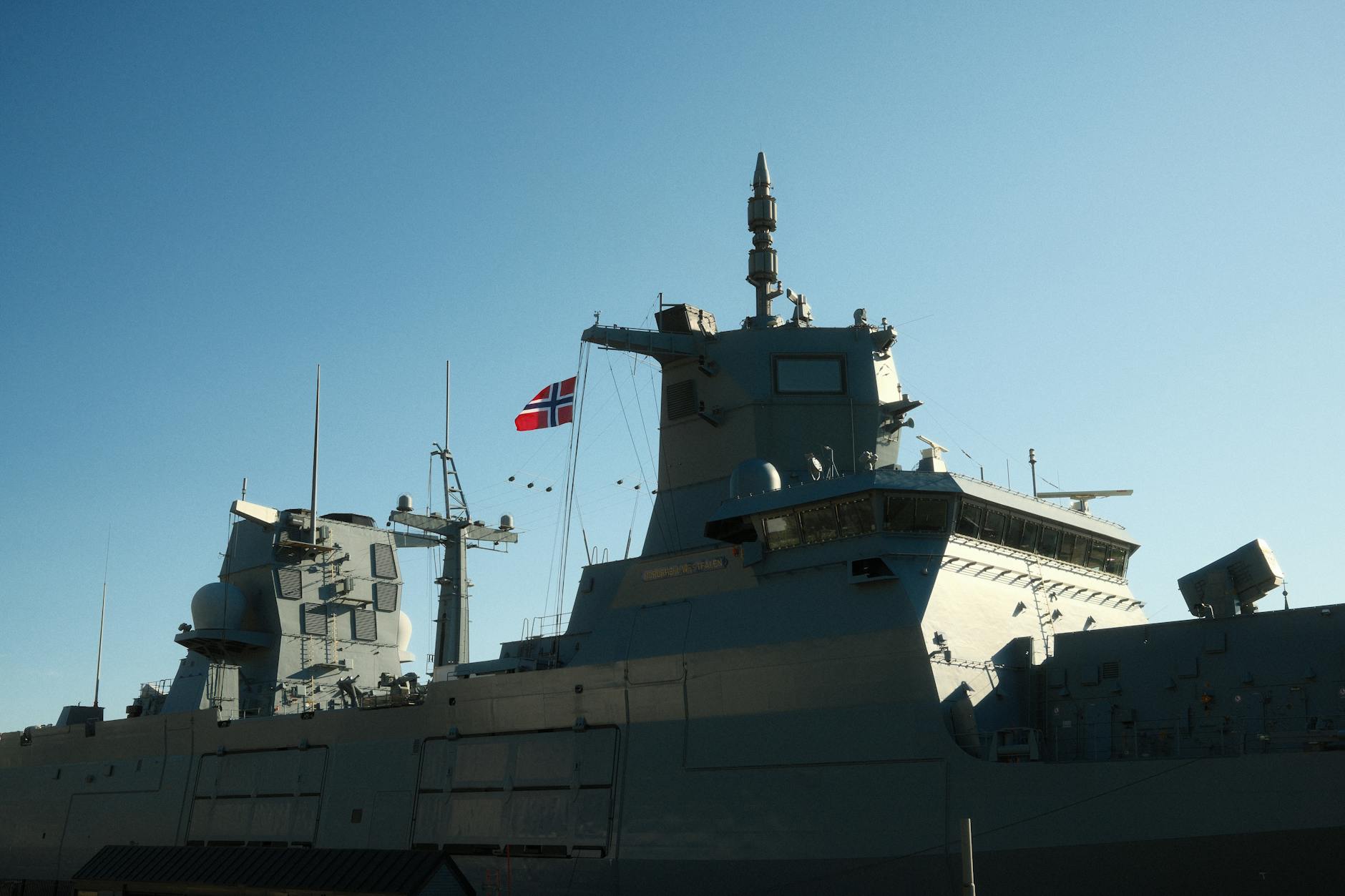
The main weapon in this confrontation was not just the ship itself. It was the F/A-18 Hornet, a carrier-born attacker built to launch fast, hit hard, and return under pressure. With top speed above Mach 1.6, a combat radius that reaches far enough to hit key targets deep in the Gulf, and a weapons load that can carry air-to-air missiles, guided bombs, and anti-radiation ordnance, it is a platform designed for sustained punishment. Only the F/A-18 can combine fleet defense, strike escort, and precision attack in the same mission set while the deck cycle keeps turning around the clock. Paired with Aegis destroyers, the formation creates layers: fighters overhead, radar ships below, and the sea lanes in between. An Arleigh Burke-class destroyer brings SPY-1 or SPY-6 tracking, vertical launch cells, and missile defense. A carrier air wing can keep pressure on targets through the entire night. The message is simple: if Iran moves assets near Hormuz, the U.S. can see it, track it, and hit it before the corridor locks down. That was the point. And that was just the beginning.
Inside the aircraft, the pre-flight rhythm was surgical. Pilots ran checklists, technicians inspected hydraulic lines, fuel states, ordnance pins, and mission computers, and deck crews signaled launch clearance with practiced precision. Engines spooled. Lights flashed. The deck came alive. Hornets rolled forward, afterburners lit, and the strike package stepped into motion with the kind of speed only naval aviation can deliver. Above the waterline, radar contacts were sorted. Below it, submarines and surface escorts kept their own watch. Alongside the F/A-18s, the destroyers were also moving, and that meant the whole formation could pivot in seconds if Iran’s missile network lit up. The pilot sees fuel. The loadmaster sees weight. The commander sees geometry. Everyone else sees consequences. Then the order came. And nothing would be the same.
The first contact changed the tone instantly. Hornets accelerated over the Gulf, streaking toward the Hormuz corridor while electronic warfare platforms suppressed search radars and surface units converged on possible launch points. At the same time, special operations teams were inserted to secure intelligence nodes near critical coastal routes, while Marines and security forces tightened control over forward positions. Air and sea power moved together. Not one after the other. Together. A drone screen pushed ahead of the strike package. A destroyer turned hard to flank speed. A second wave lifted off behind the first. In the same battle space, ordnance was being prepared, targeting data was being refreshed, and the entire operation was compressing Tehran’s decision window. This is what makes the U.S. military dangerous at scale: it can switch from watch posture to attack posture without losing tempo, and it can do it across air, sea, and land all at once.
By the time the first wave had crossed the corridor, the strategic message was unmistakable. America doesn’t bluff. It deploys carriers, it moves destroyers, it launches Hornets, and it keeps pressure on until the enemy’s options shrink to almost nothing. With more than 300 wounded already in the wider war and the next 72 hours carrying fresh risk, Iran faces a choice between escalation and containment under American air and sea dominance. Hormuz is not a place where pressure lasts forever. It is a place where power is measured in seconds, range, and resolve. The message is clear. America is not asking.