The first Hornet wave was already over water before Tehran understood the message. This was not a patrol. It was a strike package built to dominate the Strait of Hormuz, and it landed inside a war that had already wounded more than 300 American troops, triggered new G7 pressure, and pushed the region to the edge of a wider blockade fight. On March 28, 2026, the numbers are staggering: 1 month of war, 14 bases in the wider theater, and billions of dollars in naval and air power sitting on alert. What follows is not a normal news cycle. It is combat readiness turned into a public signal.
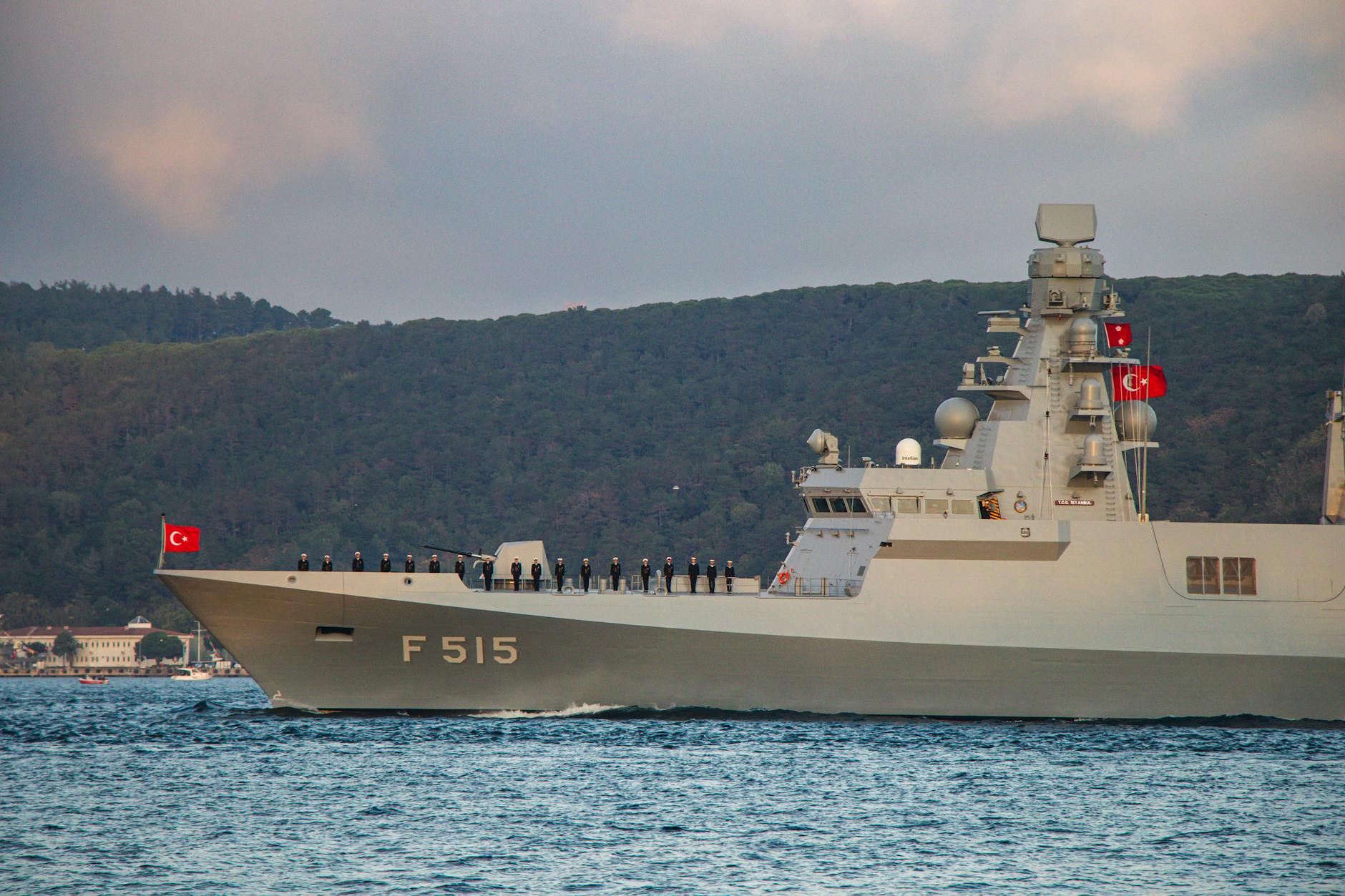
The Strait of Hormuz is only about 33 kilometers wide at its narrowest point, but in military terms it can feel even smaller when carrier aircraft, destroyers, submarines, and electronic warfare assets are all moving at once. That is why this confrontation is different. It is not just a maritime standoff. It is air power, sea power, and ground-level pressure working together.
Washington is balancing two tracks at the same time. On one side, Marco Rubio’s private G7 comments said the war could continue for another 2 to 4 weeks. On the other, Trump postponed the Hormuz deadline and opened indirect talks instead of immediate escalation. That delay matters. It means the pressure campaign is active, but the trigger remains close.
Iran has already complicated the sea lanes. Cargo movement has slowed. Insurance costs have spiked. Some vessels are still being allowed through while others are effectively stranded. At the same time, the Pentagon is weighing whether weapons meant for Ukraine may be redirected to the Middle East. That is not a small adjustment. That is a strategic shift under fire.
And while the headlines focus on the water, the battlefield is wider: Israeli strikes on Iranian nuclear facilities, drone activity against energy infrastructure, and more than 300 American wounded inside a war zone that keeps expanding. This is why the Hormuz fight matters. It is not a single choke point. It is a pressure valve for the entire Middle East.
Before dawn, the movement began on the decks and in the ready rooms. Pilots moved with the hard rhythm of battle stations. Loadmasters checked fuel loads, ordnance crews confirmed each munition, and maintainers walked the line with clipboards, flashlights, and the kind of focus that only comes when every second counts. They were carrying rifle, body armor, ammunition, and a mission that did not allow hesitation.
The crew worked through the entire night. The strike package was built for range, speed, and flexibility. Marines and sailors moved in coordinated pairs. One team handled catapult checks. Another team handled communications. A third team monitored the air picture as drones and reconnaissance feeds rolled in from the region. That kind of coordination is not improvised. It is drilled, repeated, and sharpened until it becomes muscle memory.
Across the deck, the air wing was already in battle rhythm. F/A-18 Hornets were being armed for high-tempo sorties, and the language around the ship was pure combat readiness: launch window, fuel state, holding pattern, push time, recovery cycle. The crew knew the difference between a training cycle and a real operation. This was the real thing. And when the deck turned into a machine, the message to Tehran was unmistakable: the United States had options at every altitude, at every range, and in every direction.
Then the loadmaster gave the final confirmation. The aircraft were hot. The deck was clear. The Hornets were ready to move. But they weren't done. Not even close.
The centerpiece here is the F/A-18 Hornet, a carrier-born fighter built to carry roughly 13,700 pounds of ordnance and push at speeds above Mach 1.8. In a Hormuz fight, that matters because the aircraft can switch from escort to strike to suppression in a single sortie. Only the F/A-18 can launch from a moving carrier, fight its way through contested airspace, and still return to the deck before the next wave launches. That is the edge.
These jets are not alone. The strike package depends on tankers, jamming support, surface escorts, and airborne surveillance. The destroyers hold position with Aegis systems. The carrier controls the tempo. The Hornets carry precision weapons designed to punish radar sites, launchers, and command nodes. Around the clock, the air wing cycles pilots, weapons crews, and maintenance teams through a routine that looks simple from far away and brutal up close.
A Hornet can hit targets hundreds of kilometers away, then recover at sea, get refueled, rearmed, and sent back through the same night. That is why the U.S. Navy is so dangerous in this environment. It can stretch across the Gulf, hold the strait, and force the opponent to guess where the next blow will come from. And if the mission requires it, the F/A-18 can fly low, fast, and hard with a load of ordnance that turns a narrow waterway into a zone of consequences.
This is not just presence. It is pressure. It is range, mass, and timing. Stay with this. The real operation hasn't even started.
Inside the cockpit, the pilot runs the checklist in a sequence that leaves nothing to chance. Flight controls. Fuel feed. Navigation. Weapons page. Link status. Radar sweep. The engine spools, the instruments come alive, and the aircraft shifts from steel and wiring into a live combat system. Below deck, technicians verify hydraulics, avionics, and nozzle response. Every green light matters.
On the flight deck, the launch crew moves with absolute discipline. The aircraft is guided into position, the catapult tension builds, and the final hand signals come in clean and sharp. The crew knows the deck is a battlefield in miniature. One mistake can ruin the cycle. One delay can break the rhythm. So they run it by the book, through the entire night, over and over again until the strike package is ready.
The pilot checks the weapons display one last time. The Hornet is loaded. The route is set. The escort is in place. Then the order comes. And nothing would be the same.
The first wave turned hard over the water and accelerated into the dark. Almost immediately, the radar picture changed. One system after another lit up across the battlespace. Alongside the Hornets, the destroyer screen was also moving, and the submarines below the surface were already forcing a second layer of uncertainty. In the distance, drones streaked forward, mapping the corridor, probing defenses, and feeding targeting data back to the carrier group.
Then the strike package converged. Jets erupted into afterburner, electronic warfare support came alive, and the sea line flashed with activity from multiple vectors at once. The pressure was not just airborne. It was maritime, cyber, and psychological. Tehran saw the message in the pattern: one movement from the carrier, another from the destroyers, another from the air wing, and all of it synchronized.
This is the part most people miss. The U.S. does not need to fire first to control the battlefield. It only needs to arrive with enough force that every decision the opponent makes becomes more expensive. That is why the Hormuz corridor is so dangerous now. The strike package can appear from the carrier, the coast, or the sky. And once it starts moving, the whole region feels the shock.
The next 72 hours matter because pressure like this always narrows the choices. Iran can threaten, delay, or absorb losses, but America still holds the most flexible strike architecture in the region. Carrier aviation. Destroyer firepower. Special forces options. Long-range air power. America doesn't bluff.
The Strait of Hormuz is not just a shipping lane anymore. It is a test of control. And every sign points to a U.S. military posture built to escalate on command, or stand down on command, without losing the upper hand. The message is clear. America is not asking.